
Guide
Why TOF, MOF and BOF Ads Need Different Landing Pages
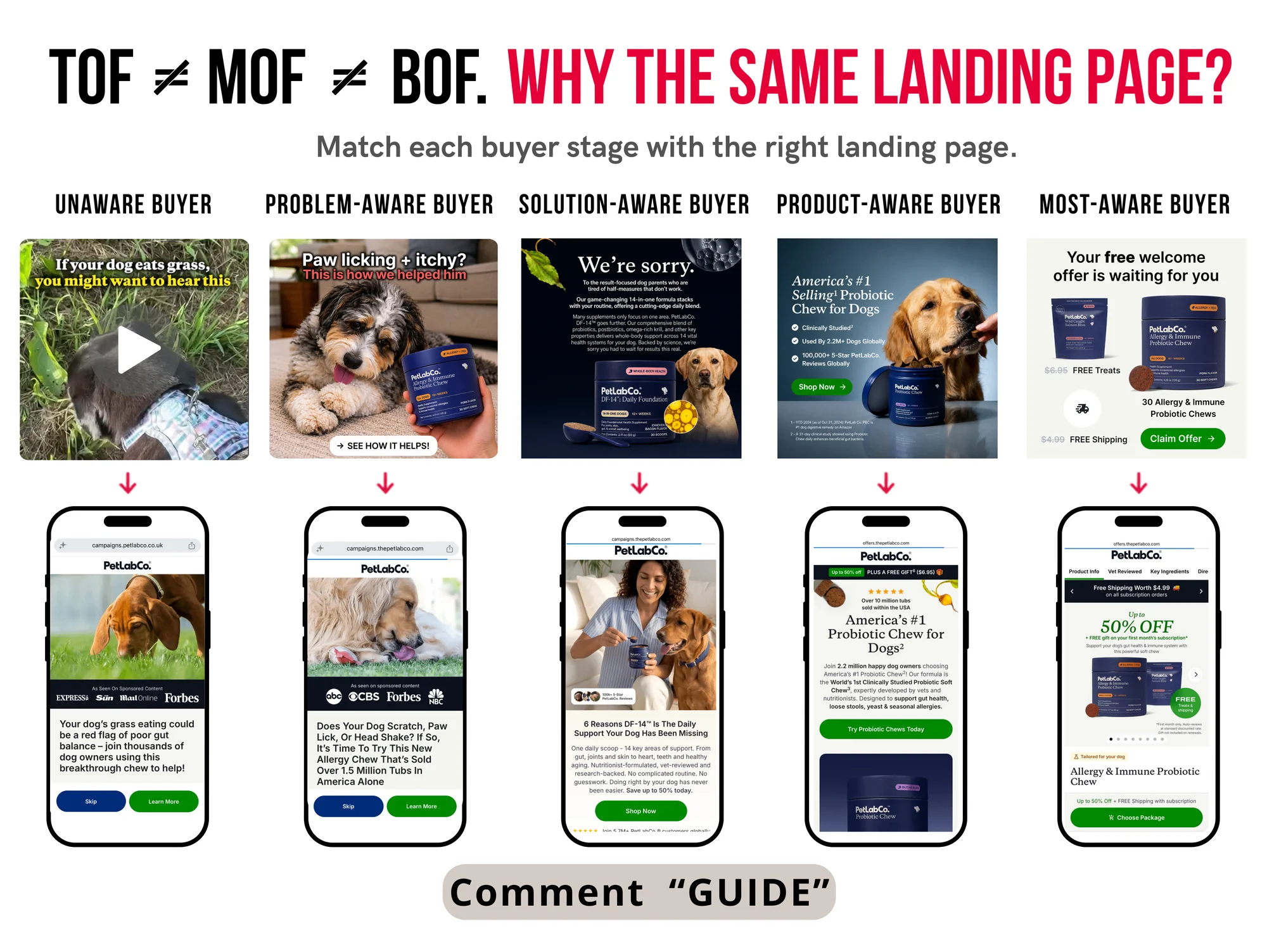
Sending every Meta ad to the same product page ignores a basic reality: people click with different levels of awareness.
One person may notice a behaviour but not realise it could signal a problem. Another already knows the problem and wants a solution. Someone further down the funnel may know the solution category or the exact product and need only proof, reassurance or the right offer.
The product can stay the same while the information needed before purchase changes.
That is why the journey should follow this sequence:
Buyer awareness → ad message → what is still missing → landing page
PetLab provides a useful example. These five captured ad-to-landing-page journeys begin with five different customer states, from unaware through most aware. The analysis below looks at how each page continues the reason for the click and fills a different persuasion gap.
Buyer awareness describes how much someone already understands about the problem, the available solutions and the product being advertised. It also helps identify what they still need before they are ready to act.
The five stages are:
These stages are not rigid labels for every individual. They are a practical way to decide how much education, explanation, proof and offer detail a post-click journey should provide.
Brands already adjust their ads around these differences. A behaviour-led ad can help someone recognise a problem. A benefit-led ad can compare solutions. A proof-led ad can reduce uncertainty around a known product. An offer-led ad can give a purchase-ready buyer a reason to act.
The landing page should preserve that logic after the click.
Ad type: Symptom and behaviour-led educational video Landing page type: Diagnostic quiz and problem-solution presell For: Dog owners who may see grass eating, licking or scratching as ordinary behaviour and may not connect it with gut health
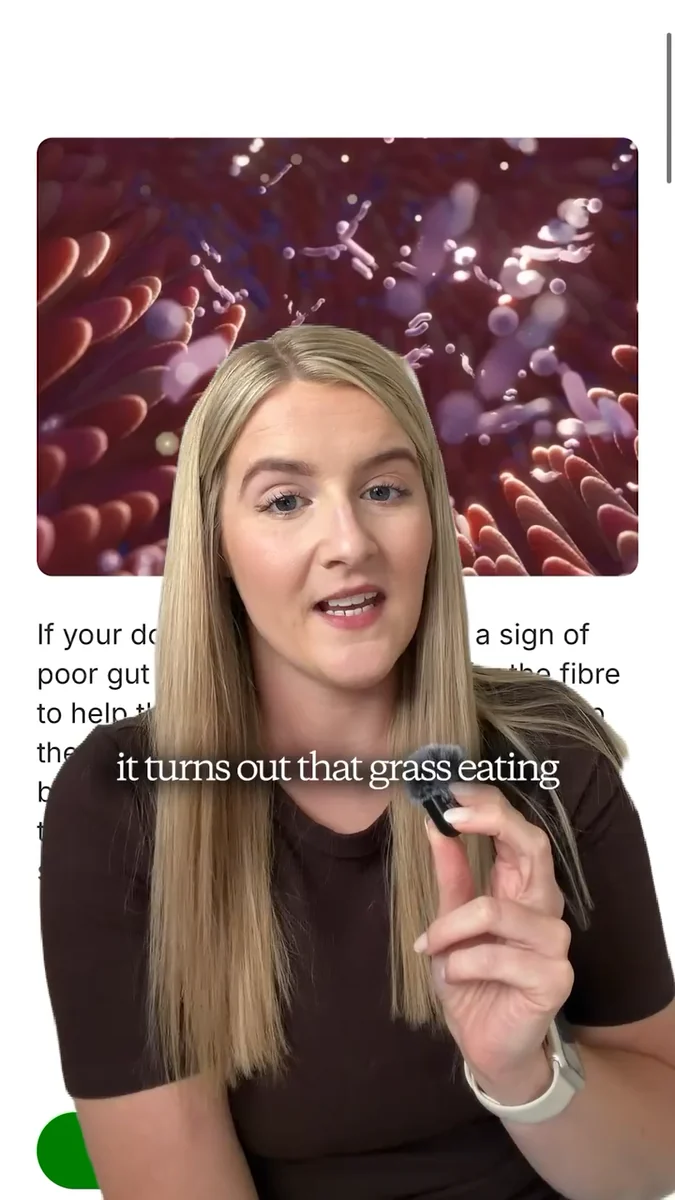
The selected video and its representative frame center on a dog eating grass. The matching landing page develops PetLab’s argument that this behaviour can sometimes be associated with poor gut balance, then broadens the symptom picture and introduces the Probiotic Chew.
The important job of this ad is not to compare products. It is to change the meaning of something the viewer may have dismissed as normal. The click comes from a new question: could this familiar behaviour be telling me something?
The landing page continues with the same dog-eating-grass context and the headline “Your dog’s grass eating could be a red flag of poor gut balance.” It then explains what PetLab says grass eating can mean, lists other possible signs, introduces the chew and presents ingredient, veterinarian, customer and review claims before moving into questions about the dog’s weight and symptoms.
That quiz matters at this stage because the visitor is still diagnosing the situation. The page gives the behaviour a possible explanation, broadens the symptom picture and helps the owner place their dog inside the problem before moving toward the product.
The sequence is:
Familiar behaviour → possible hidden problem → signs and explanation → product introduction → diagnostic questions
Media note: Funnel 1’s source ad is a video. The gallery uses a representative still from that video, not the complete motion creative.

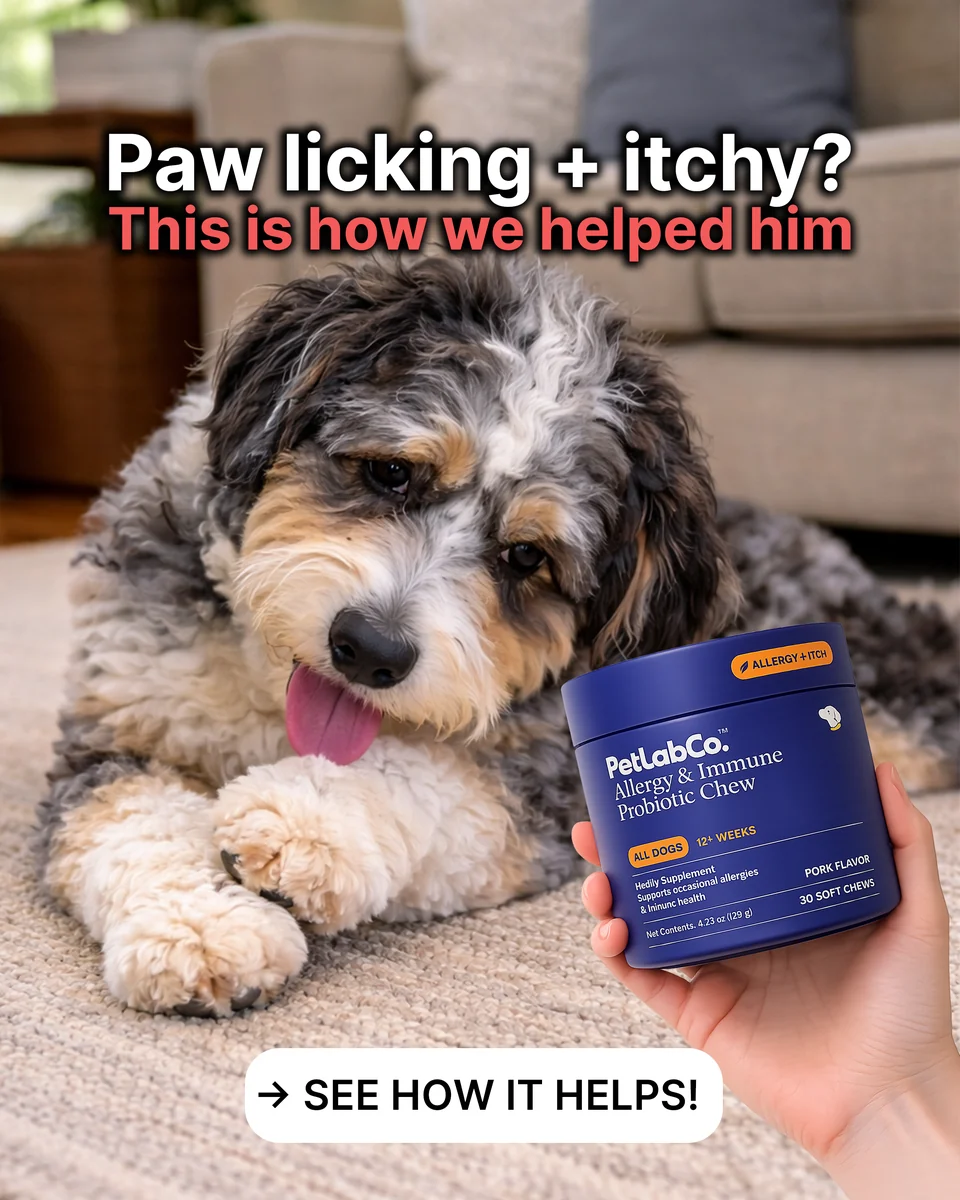
Ad type: Problem-specific, symptom-led ad Landing page type: Problem-solution presell and diagnostic quiz For: Dog owners who already recognise paw licking, itching or scratching as a problem but may not know the proposed cause or solution
The ad is direct: “Paw licking + itchy? This is how we helped him.” It shows the dog beside PetLab’s Allergy & Immune Probiotic Chew and invites the viewer to see how the product helps.
Unlike the unaware audience, this person does not need to be persuaded that something is wrong. They can already see the licking or itching. What is missing is an explanation of why it may be happening and what kind of response could help.
The landing page keeps the same symptom visible and asks whether the dog scratches, paw licks or head shakes. It then says it is time to try PetLab’s Allergy & Immune Chew. From there, PetLab connects seasonal allergy signs with gut and immune health, presents its product comparison and survey claims, adds veterinarian and customer proof, and asks about the dog’s weight and symptoms.
This is a tighter journey than Funnel 1. It does not need to reinterpret an apparently harmless behaviour first. It begins with a recognised problem, gives PetLab’s explanation for it and moves into the product and quiz.
The sequence is:
Recognised symptom → proposed explanation → product mechanism → trust and proof → diagnostic questions

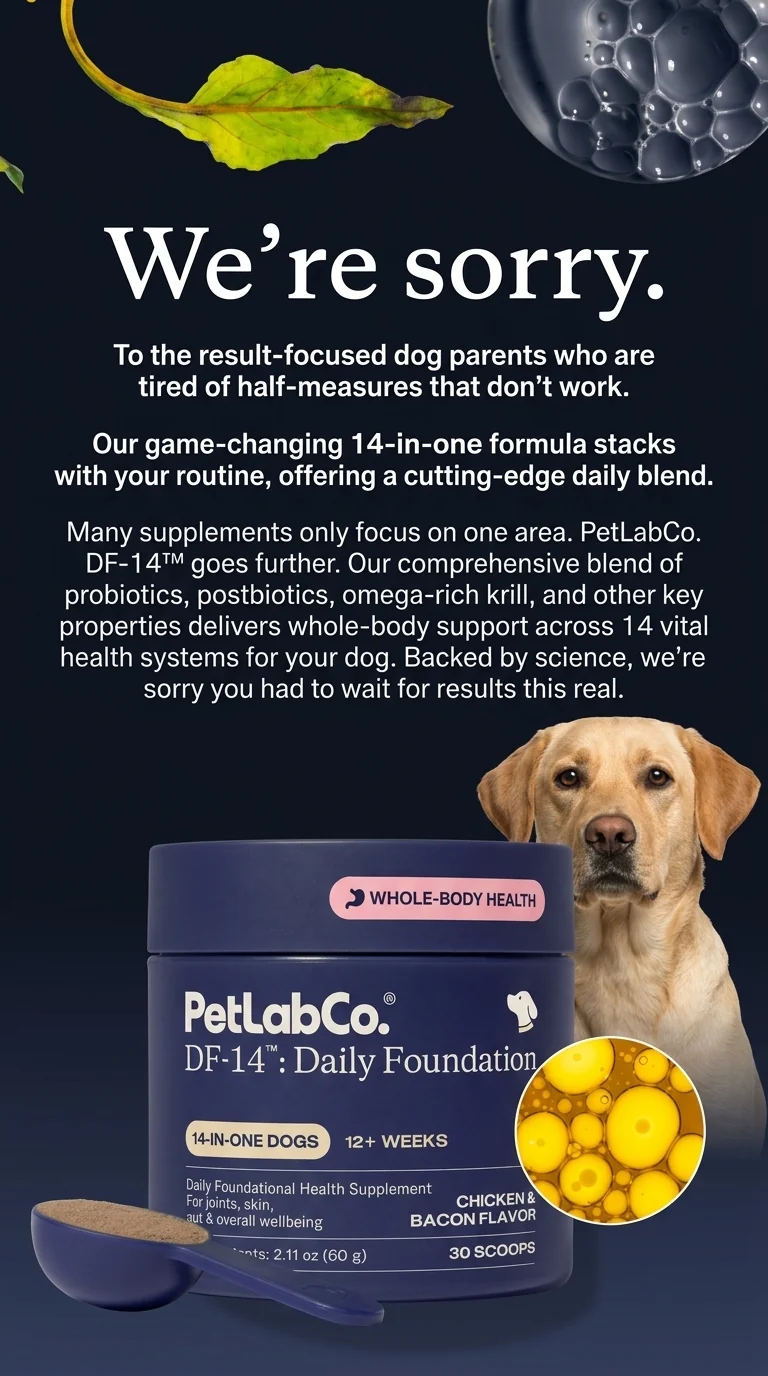
Ad type: Solution and benefit-led ad Landing page type: Reasons-based product explainer presell and product page For: Dog owners who already believe supplements can support their dog’s health but are deciding which kind of supplement is worth choosing
The DF-14 ad does not need to establish that dog supplements exist. Instead, it challenges the limitations of narrow products. PetLab describes DF-14 as a “14-in-one” daily blend and says it supports 14 health systems through ingredients including probiotics, postbiotics and omega-rich krill.
Those are PetLab’s product claims, not independently verified results in this analysis. Strategically, their role is clear: position one broad daily formula against the inconvenience or incompleteness of stacking several single-purpose supplements.
The landing page continues with “6 Reasons DF-14 Is The Daily Support Your Dog Has Been Missing.” It organizes the argument into reasons, including support across 14 health areas, less supplement stacking, expert formulation, scientific and third-party testing, PetLab customer proof, and ingredient transparency.
This buyer already accepts the category. The page therefore spends less time proving that supplementation can matter and more time explaining why PetLab says this particular format is broader, simpler and more credible than the alternatives.
It then transitions naturally into the product offer and package choices. The education is comparative rather than diagnostic.
The sequence is:
Known solution category → dissatisfaction with narrow options → differentiated formula → reasons and proof → product choice
Display note: This long landing page is shown as a representative excerpt for readability. The analysis is based on the supplied full-page capture.

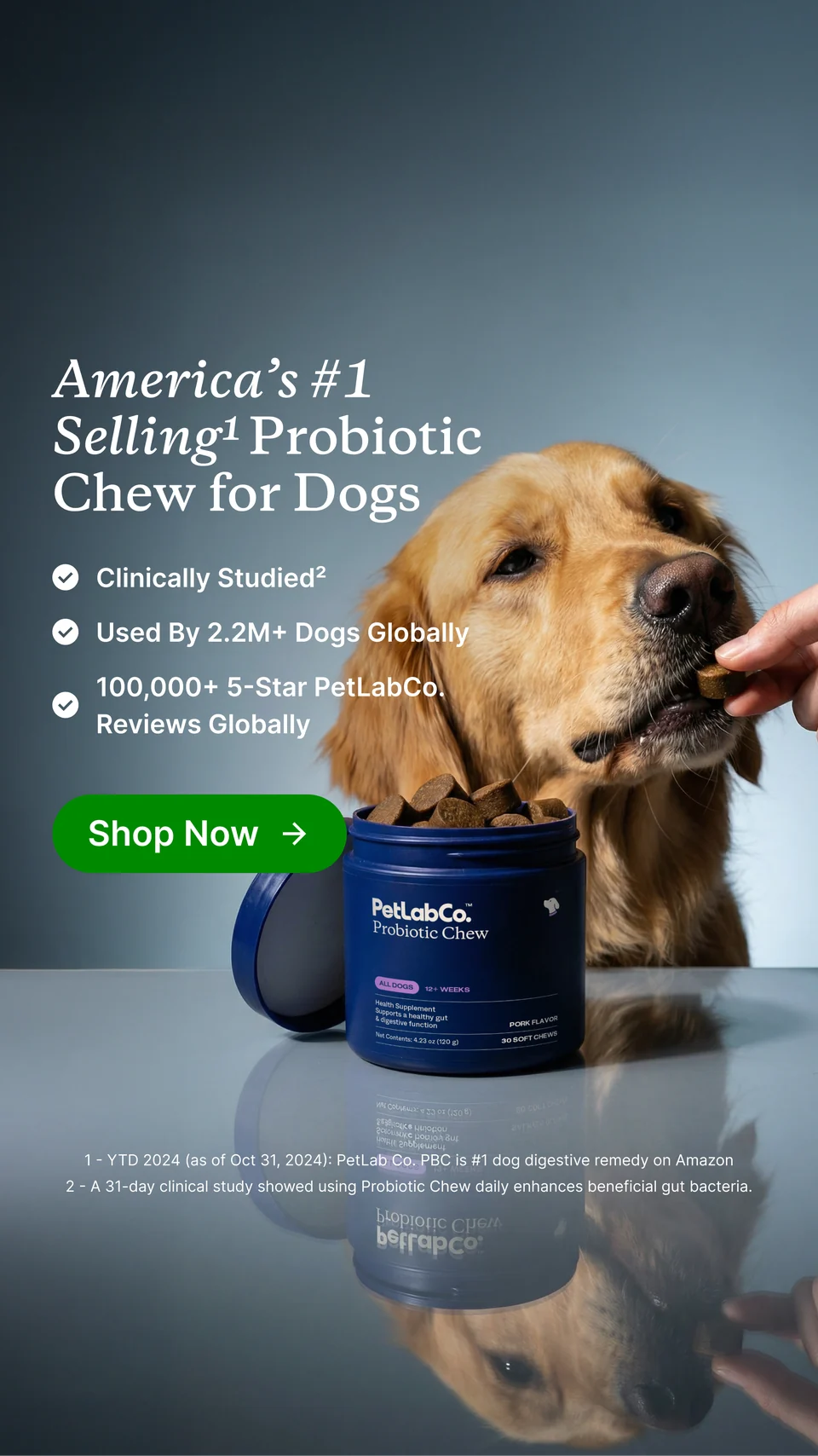
Ad type: Product and proof-led ad Landing page type: Hybrid proof page and product page For: Dog owners who know PetLab’s Probiotic Chew and broadly understand its purpose but want more confidence before buying
The creative leads with PetLab’s claim that its product is “America’s #1 Selling Probiotic Chew for Dogs.” It also says the chew is clinically studied, used by more than 2.2 million dogs globally and supported by more than 100,000 five-star PetLab reviews worldwide.
The ad includes footnotes for two of those statements. It says the number-one claim refers to PetLab PBC being the number-one dog digestive remedy on Amazon for year-to-date 2024 as of October 31, 2024. It also says a 31-day clinical study found that daily use enhanced beneficial gut bacteria. These remain advertiser-supplied claims visible in the captured creative. This article does not independently verify them or infer sales or conversion performance from them.
The landing page carries the same proof-led argument forward. Its opening repeats the “America’s #1 Probiotic Chew for Dogs” positioning and presents PetLab’s customer, veterinarian and clinical-study claims. It then expands into stated benefits, ingredient and quality information, survey percentages, reviews, professional recommendations and the product offer.
That is appropriate for a product-aware visitor. The main question is no longer “what kind of solution should I consider?” It is “why should I trust this product?” The page answers by layering multiple forms of proof around a product the buyer may already recognise.
The sequence is:
Known product → headline proof claim → clinical and customer proof → benefits and quality reassurance → offer
Display note: This long landing page is shown as a representative excerpt for readability. The analysis is based on the supplied full-page capture.

Ad type: Offer and promotion-led ad Landing page type: Direct offer and product page For: Buyers who already know the product and broadly understand what it does but may need a final reason to purchase
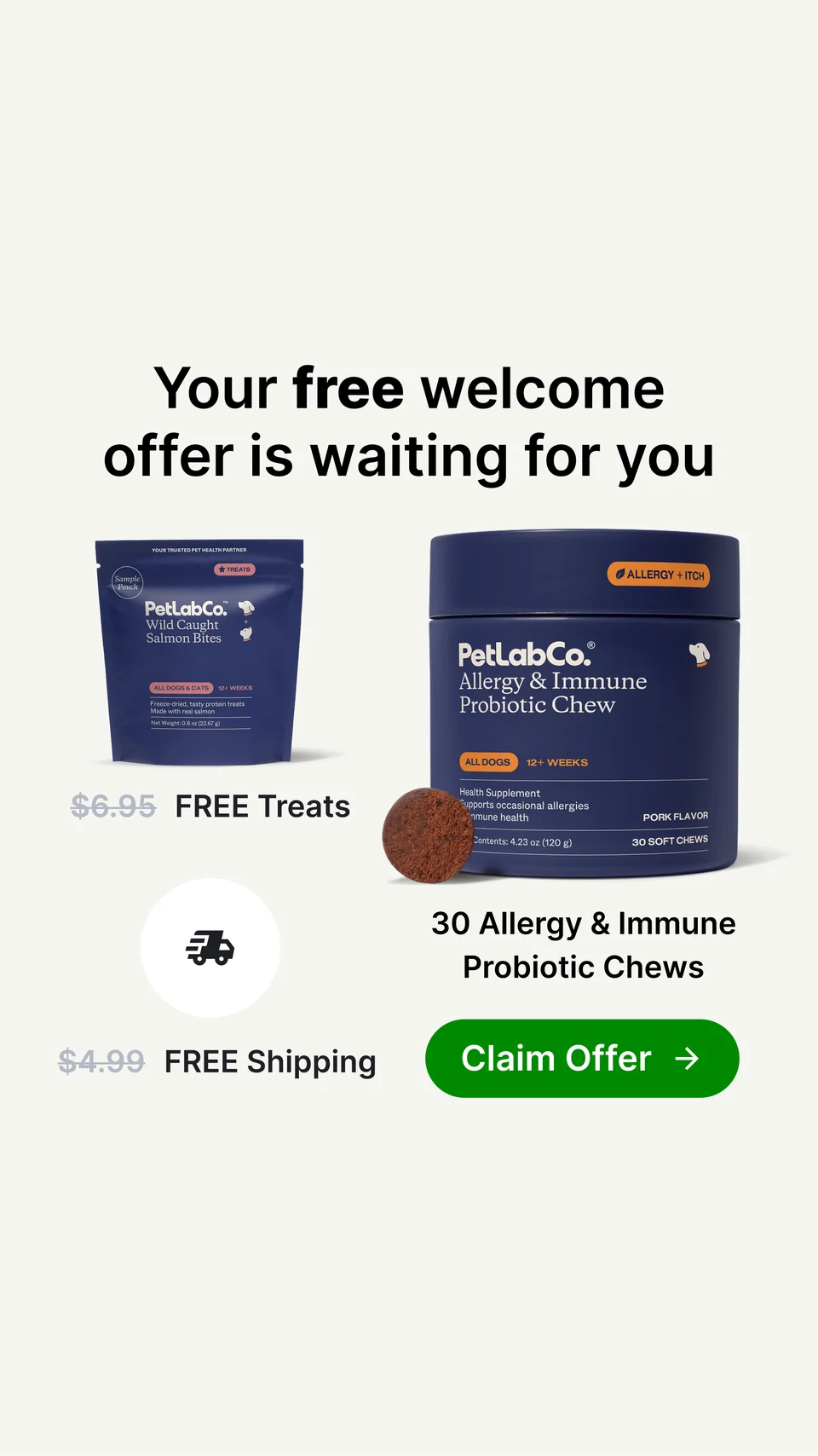
The ad wastes no time on broad education. It says “Your free welcome offer is waiting for you” and presents free treats, free shipping and 30 Allergy & Immune Probiotic Chews with a “Claim Offer” CTA.
These are the terms shown in the captured PetLab creative, not a current-offer guarantee from this article. Their strategic function is to give an already informed buyer a concrete incentive to continue.
The landing page follows the same offer-first logic. The supplied capture presents up to 50% off, a free gift on the first subscription and free shipping with subscription. It keeps the Allergy & Immune Probiotic Chew visible, then adds reviews, product information, ingredient and veterinarian claims, directions, expected-use information and package choices.
There is no long diagnostic quiz like the earlier funnels. The page still supplies reassurance for anyone who needs it, but it moves quickly toward choosing a package and buying. For a most-aware visitor, repeating the entire problem education would add friction instead of resolving uncertainty.
The sequence is:
Known product → timely offer → concise reassurance → package selection → purchase
Display note: This landing page is shown as a representative excerpt from the supplied source PDF for readability.

The product page does not need to become shorter or longer simply because the buyer is further down the funnel. It needs to prioritize the information that is still missing.
Across all five, the strongest continuity comes from preserving the argument that earned the click. The page does not force the visitor to reconstruct the connection between the ad and the product.
A generic product page may contain plenty of information, but that does not mean it presents the right information in the right order for every visitor.
Someone entering through a grass-eating video needs help interpreting a behaviour. Someone entering through a paw-licking ad needs an explanation tied to a recognised symptom. Someone considering DF-14 needs differentiation. Someone who already knows the Probiotic Chew needs proof. Someone clicking a welcome offer needs the offer preserved and the buying path kept clear.
The practical questions for any ad-to-page journey are:
That is the core lesson from these five PetLab examples:
Change the ad for the buyer’s awareness stage, then make the landing page continue the same journey.